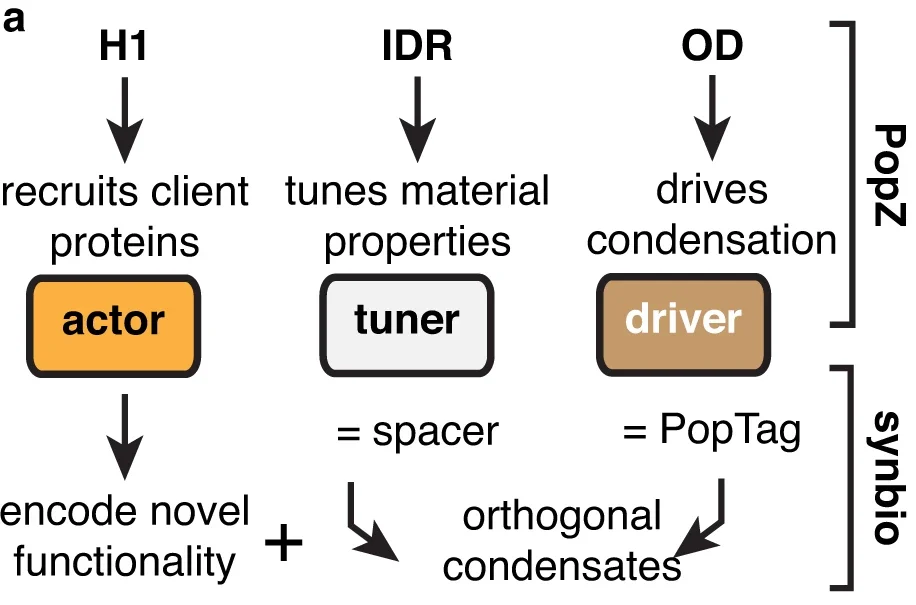
Biomolecular condensate formation by phase separation has emerged as a new principle to explain the dynamic organization of living cells. Using the polar organizing protein Z (PopZ) from the α-proteobacteria Caulobacter crescentus as a model system, our lab is interested in…
How structure, dynamics, and organization contribute to the function of PopZ in C. Crescentus
Engineering the minimal and modular subunit, PopTag, for controlling cellular processes in mammalian cells
Engineering PopTag as environmentally isolated micro environments for enzymatic reactions and biomolecules like RNA
At Scripps, we have access to a variety of instruments through Core Facilities. High resolution imaging allows us to probe filaments, material properties, and micron-scale organization of PopZ/PopTag condensates both in vitro and in cellulo. Furthermore, we apply synthetic and cell biology approaches to engineering PopTag in bacteria and mammalian cells.
Contact Us! We are hiring!
We are building an inclusive and stimulating environment and would work with you to help you make discoveries, grow as a scientist, and achieve your professional goals.
1st floor of the Skaggs Molecular Biology Building. Room 105